Eldritch Mlems

1 readers
0 users here now
founded 2 years ago
ADMINS
4201


"He's lying down, time to claim him as mine, again!"

4202
 
 
4203
 
 
4204


My 18yo cat claimed the last of the laundry. Guess I'll just fold it after my work shift.

4205
 
 
4206
 
 
4207
4208


This year, I told myself, I was going to read for pleasure. I spent most of 2024 engaged in a research project, reading a lot of abstruse theory and depressing news stories about transphobia, and I could not cram any more facts about gender into my head without giving myself an aneurysm. I knew 2025 was going to be a terrible year, with a high toll of human death and suffering, and I wanted to carve out a place for joy, so that I could do my work without suffocating. I figured I would study up for my other gig —I sometimes write comics—and just read a whole lot of comic books. Simple, right?

Nothing in this world is simple. Nothing is free of politics, or of queerness, and comics have been political and queer since the beginning.

Most people’s first association with the term “comic books” is mainstream superhero comics, of the type put out by DC and Marvel, which are a notoriously escapist medium. Superheroes have never been apolitical—Superman, the world’s most powerful immigrant, was created by two Jewish immigrants in 1938 as a reaction to the rise of Nazism; the X-Men were created in the 1960s as an allegory for the civil rights movement—but they are, explicitly, power fantasies. They exist to tell stories about good overcoming evil, or (subtextually) marginalized people overcoming their oppressors. Unlike our world, they come with a built-in guarantee of justice, which is a large part of the appeal.

Yet those comics represent only a fraction of the work being made—and in queer comics, particularly, there is a long history of work that is autobiographical, realistic, organic, grounded and explicitly radical. In the 1980s and ’90s, underground comics like Hothead Paisan: Homicidal Lesbian Terrorist or Alison Bechdel’s Dykes to Watch Out For were upfront and enraged about the realities of queer life at a time when mainstream publishers wouldn’t touch us. Rather than encoding the realities of queer oppression in an allegory, so as to sway straight hearts and minds, they spoke directly to and from the community. In the present-day culture war on trans people, independent and small-press comics like Maia Kobabe’s Gender Queer or the web-based Haus of Decline still spark a large share of the conversation.

4209


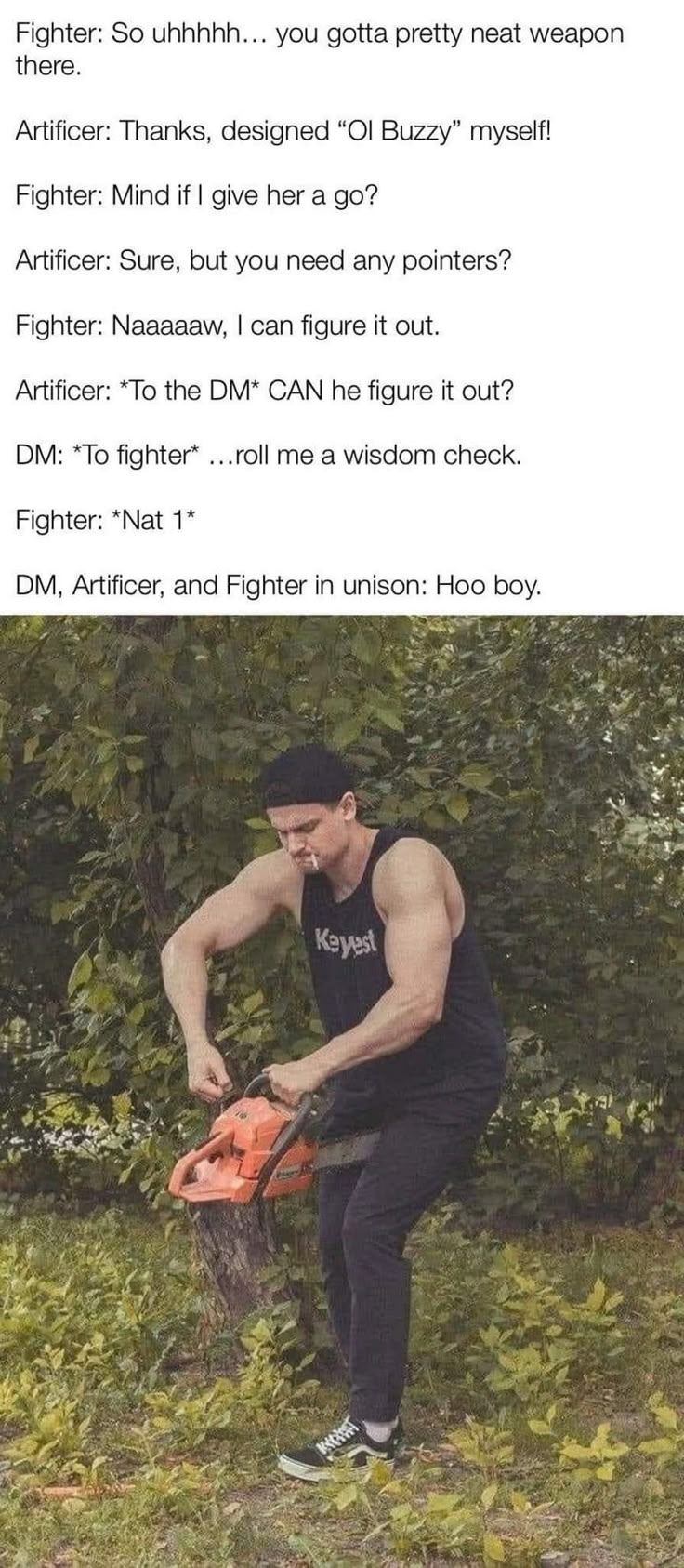
TranscriptionFighter: So uhhhhh... you gotta pretty neat weapon there.

Artificer: Thanks, designed "Ol Buzzy" myself!

Fighter: Mind if I give her a go?

Artificer: Sure, but you need any pointers?

Fighter: Naaaaaw, I can figure it out.

Artificer: *To the DM* CAN he figure it out?

DM: *To fighter* ...roll me a wisdom check.

Fighter: *Nat 1*

DM, Artificer, and Fighter in unison: Hoo boy.

[A picture of a man starting a chainsaw while the blade is placed between his legs, resting on his crotch.]

4210


cross-posted from: https://lemmy.world/post/30635721

Author unknown, unfortunately. Reverse image search doesn't yield results :(

4211
 
 
4212
 
 
4213
 
 
4214


Source (Mastodon)

4215
 
 
4216


Bonus pic from after we moved the bed

4217
 
 
4218
 
 
4219


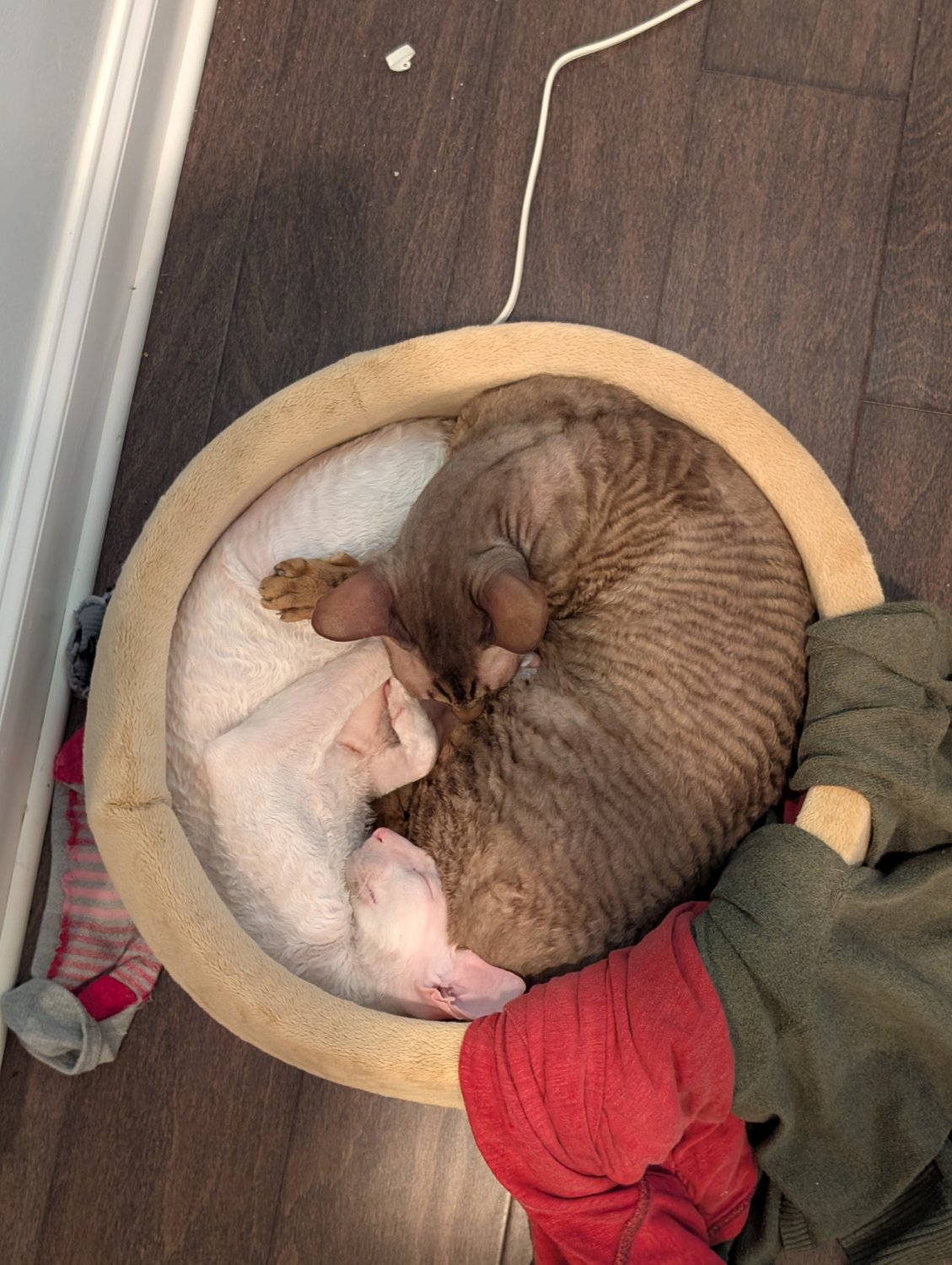
Wikipedia link for anyone interested. Hope this fits the community. I think they're adorable.

4220
 
 
4221
 
 
4222
559
Awwww (lazysoci.al)
submitted 10 months ago by LadyButterfly@lazysoci.al to c/aww@lemmy.world
 
 
4223


Larsen is far from alone when it comes to adapting to a new voice following a gender transition. Experts say that of the over 1 million Americans who identify as transgender, an increasing number are turning to gender-affirming vocal care, including hiring voice coaches and even undergoing surgeries.

And a 2018 study in the Language and Linguistics Compass found that vocal cues are an important factor in categorising someone’s gender, “making the voice an enormously important aspect of gender presentation, particularly for those who are transitioning.”

“It was always something that was very important to me – having a voice that matches my body,” says Alaina Kupec, founder and President of GRACE, a trans-focused nonprofit. “As soon as I spoke, if the sound didn’t match the appearance, then the incongruence was very challenging,” she told Uncloseted Media.

Like Larsen, many trans men change their voice by taking testosterone, which causes a thickening of the vocal cords and creates a deeper-sounding voice.

But for transgender women, estrogen does not change their voice. That’s why there’s a growing industry of coaches who help people with this aspect of the transition.

Voice teacher Brittani Farrell compares relearning how to use your voice after a gender transition to “relearning how to walk with a prosthesis after having your leg amputated.”

4224
197
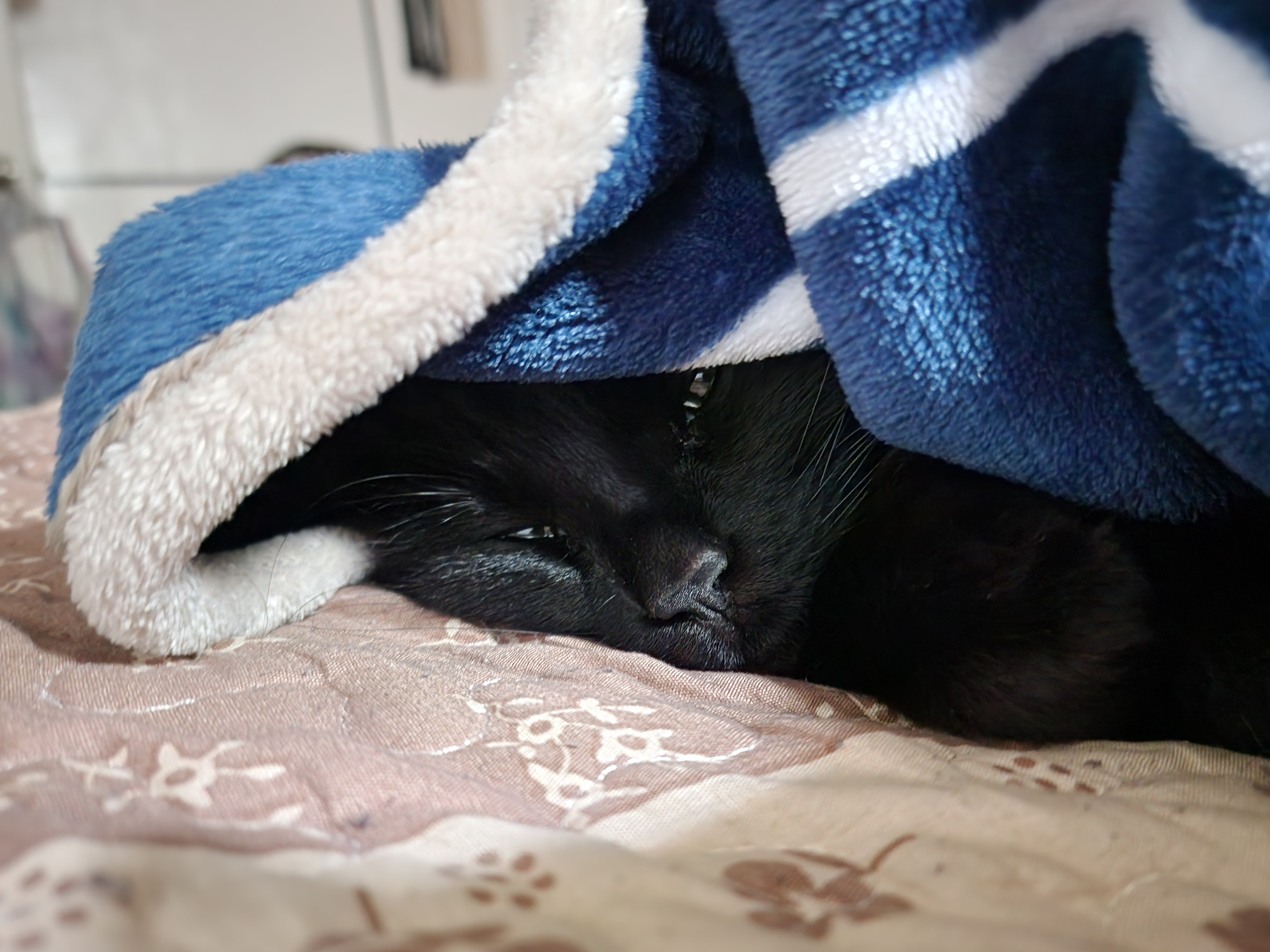
Nap Time (lemmy.world)
submitted 10 months ago by 2ugly2live@lemmy.world to c/cat@lemmy.world
 
 
4225
 
 
view more: ‹ prev next ›